
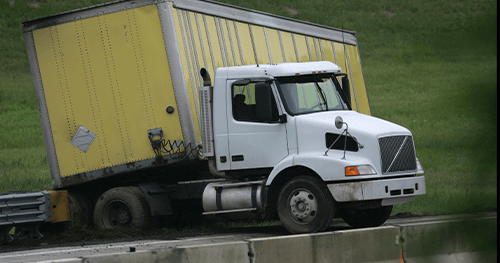
Commercial trucks play a vital role in Florida’s economy, but when they exceed legal weight limits, they become far more dangerous on busy roadways like I-95, the Palmetto Expressway, and Florida’s Turnpike.
Federal and state regulations limit how much weight a commercial truck can carry because overloaded trucks are harder to control and more likely to cause devastating crashes.
If you’ve been injured in a collision involving a tractor-trailer, a Miami truck accident lawyer can investigate whether excessive truck weight contributed, and which parties may be legally responsible for your injuries.
Why Truck Weight Limits Exist
Commercial truck weight is regulated by both federal law and Florida statutes to reduce the risk of serious accidents. Under federal regulations, most large trucks are limited to a total weight of 80,000 pounds, including the vehicle, cargo, fuel, and driver. Florida Statute 316.535 enforces these limits and operates weigh stations throughout the state to catch violations.
These limits aren’t arbitrary. They exist because excessive weight affects how a truck handles, brakes, and responds in emergency maneuvers. Even modest overloads can increase stopping distance and strain critical safety components, potentially compromising overall vehicle safety.
How Overloaded Trucks Increase Crash Risk
When a truck exceeds legal weight limits, it becomes a rolling hazard. Excess weight impacts nearly every aspect of vehicle safety.
Overloaded semi-trucks are dangerous due to:
Longer Stopping Distances
Heavier trucks require far more time and distance to slow down and come to a complete stop. According to the Federal Motor Carrier Safety Administration (FMCSA), a fully loaded tractor-trailer traveling at highway speed can take 40% longer to stop than a passenger vehicle. Overloading makes that gap even worse.
Higher Risk of Brake Failure
Braking systems are engineered for specific weight ranges. Overloaded trucks place excessive stress on brake components, increasing the risk of overheating, brake fade, or complete failure, especially in South Florida’s stop-and-go traffic.
Increased Tire Blowout Risk
Excess weight places added pressure on tires, raising the likelihood of blowouts. Tire failures at highway speeds often cause commercial truck drivers to lose control, leading to multi-vehicle crashes.
Rollovers and Jackknife Accidents
Overloaded trucks have a higher center of gravity, making them more prone to rollovers on curves or during sudden maneuvers. Excess weight can also cause trailers to swing out, resulting in dangerous jackknife crashes.
According to FMCSA data, Florida saw 52 cargo-related truck crashes in 2025, many resulting in severe injuries or fatalities.
Who May Be Liable When a Truck Is Overloaded?
One of the most important aspects of overloaded truck accident claims is that liability often extends to more than just the driver. Florida law allows injured victims to pursue compensation from any party whose negligence contributed to the crash.
Potentially liable parties may include:
- The truck driver, for knowingly operating an overloaded vehicle
- The trucking company, for pressuring drivers to haul excessive loads or failing to enforce safety policies
- Cargo loaders or freight companies, for improperly loading or weighing the shipment
- Maintenance contractors, if weight-related wear contributed to mechanical failure
This is why it’s critical to work with an experienced lawyer. These cases are rarely straightforward, and trucking companies often move quickly to limit their exposure to liability.
How To Prove Weight Violations After a Crash
Unlike standard car accidents, proving a truck weight violation requires detailed investigation and technical evidence. Lawyers may collect and analyze sources such as:
- Weigh station and inspection records
- Electronic logging device (ELD) and black box data
- Bills of lading and shipping manifests
- Maintenance and inspection reports
- Accident reconstruction analysis
Trucking companies and insurers rarely provide this information voluntarily. Legal action is often necessary to preserve evidence before it’s altered or destroyed.
Why Legal Help Matters After an Overloaded Truck Accident
Truck accident claims involving weight violations are complex, high-stakes cases. Victims often face catastrophic injuries, long-term disability, and overwhelming medical expenses. At the same time, trucking companies and their insurers aggressively defend these claims to protect their bottom line.
An experienced attorney can expose hidden weight violations, take on every negligent party involved, and fight for compensation that fully reflects what you’ve lost.
We seek compensation that acknowledges the impact of an accident on your life, covering not only immediate medical expenses and future treatment but also lost income and the ongoing pain and suffering that persist long after the crash is over.
Protect Your Truck Accident Claim With Qualified Legal Support
If you or a loved one was injured in a truck accident in Miami or South Florida, weight violations may be a critical piece of your claim. The legal team at Aigen Injury Law is well-versed in federal trucking regulations, Florida liability laws, and knows how to hold negligent drivers and companies accountable.
Contact our law firm to speak with a truck accident lawyer and learn how we can protect your rights and get you the compensation you deserve.